Source Wheeled Articulated Telehandler for Construction, Agriculture, and Logistics
Compare 30 wheeled articulated telehandler models with lift heights over 5 meters and capacities up to 4 tons. Evaluate diesel engines, hydraulic outputs, and tire options to find the right equipment for your industrial needs; compare the available evidence and request quotations based on your requirements.
Key considerations
Products List


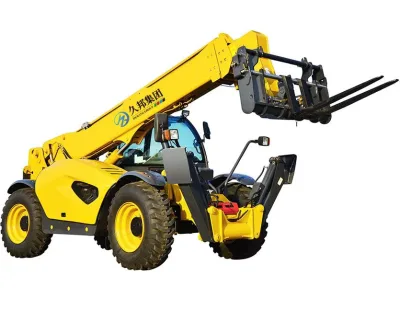
Telehandler Telescopic Handler Loader for Construction and Material Handling
$28850.00 - $120000.00
Moq: 1




Comprehensive Sourcing Guide
Wheeled Articulated Telehandler Sourcing Guide
Buyers must first distinguish between standard forklifts and articulated telehandlers, as the latter offers superior reach and lift height capabilities essential for complex construction sites. The observed product data indicates a specific focus on diesel-powered units with lift heights exceeding 5000mm, reaching up to 12800mm in high-capacity models. This distinction is critical because standard forklifts typically lack the telescopic boom required for stacking materials at significant heights or reaching over obstacles. Procurement teams should prioritize suppliers who explicitly list these extended reach specifications to ensure the equipment matches the vertical and horizontal demands of the intended job site.
Commercial listings reveal a wide price variance, ranging from 5900 to 130000 USD, which often correlates with the rated load capacity and maximum lift height. The observed models include capacities from 3 tons up to 6 tons, with specific configurations like the M730 and M1340 offering distinct weight and power profiles. Buyers should not assume all listed units share the same performance metrics; instead, they must verify the specific model number against the required load center and lifting capacity. Understanding these variations prevents the common error of purchasing a unit that is either underpowered for heavy loads or over-engineered for lighter tasks, thereby optimizing the total cost of ownership.
Product Scope and Observed Listing Signals
The market data highlights a clear segmentation based on load capacity, with observed standards ranging from 3-ton to 4-ton telehandlers and broader ranges up to 6 tons. Specific models like the M735 and TH1440 demonstrate that manufacturers offer tailored solutions for different operational needs, such as the 3.5-ton standard or the 2.5-4 ton range. Buyers should scrutinize the "prod_standard" field to confirm the exact tonnage rating, as this directly impacts the stability and safety of operations when handling heavy pallets or construction materials. Ignoring these specific capacity ratings can lead to equipment failure or unsafe working conditions on the job site.
Another critical signal in the listings is the variation in engine power and fuel type, with diesel engines rated between 75HP and 125HP being the dominant configuration. The observed data shows that higher horsepower units, such as those rated at 125HP, are often paired with larger weights and higher hydraulic outputs, indicating their suitability for demanding, continuous-duty cycles. Procurement teams must match the engine power to the specific hydraulic demands of the application, ensuring that the hydraulic output, which ranges from 96L/Min to 130L/Min, is sufficient for the intended lifting and tilting speeds. This alignment ensures that the machine can maintain productivity without overheating or stalling under load.
Technical Specifications to Verify
When evaluating the physical dimensions of the telehandler, buyers must verify the wheelbase and track width to ensure compatibility with the intended work environment. The observed data presents varying wheelbases, such as 2500mm and 3100mm, alongside track widths of 1785mm and 1804mm, which significantly affect maneuverability in tight spaces. A wider track provides greater stability for high-lift operations, while a shorter wheelbase enhances agility in confined areas. Procurement teams should calculate the turning angle, observed at 35 degrees, to determine if the machine can navigate the specific aisles or terrain of the facility without requiring excessive space for operation.
The lifting mechanism's performance is defined by the maximum height to the bottom of the pallet fork, which can range from 7540mm to 12800mm depending on the model. Buyers must confirm that the specific model selected can reach the required stacking height while maintaining the necessary load center of 500mm for safe operation. Additionally, the transmission type, observed as hydraulic in the provided data, requires verification of the gearshift mechanism, which is noted as electrical in some configurations. Ensuring the transmission system matches the operational frequency and load requirements is essential for maintaining efficiency and reducing mechanical wear over the long term.
Compliance and Safety Documentation
Safety compliance is paramount, and buyers must verify that the equipment meets recognized international standards such as CE, RoHS, ISO, and TUV, which are explicitly listed in the product data. These certifications indicate that the telehandler has undergone rigorous testing for structural integrity and operational safety, which is crucial for insurance and regulatory approval in many jurisdictions. Procurement teams should request the specific certification documents for the exact model being purchased, as compliance is not always uniform across all product lines from a single manufacturer. Relying on general certification claims without verifying the specific model's documentation can expose the buyer to significant legal and safety liabilities.
Operational safety features, such as the service brake system, must also be thoroughly reviewed to ensure they meet the specific safety protocols of the work site. The observed data indicates the use of wet brakes that are maintenance-free and do not require air systems, which offers a distinct advantage in terms of reliability and reduced downtime. Buyers should confirm that the brake system, whether described as a footbrake or a wet brake, is appropriate for the terrain and load conditions of the intended application. Verifying these safety mechanisms ensures that the machine can be stopped reliably under all operating conditions, protecting both the operator and the surrounding infrastructure.
Cost Drivers and Commercial Terms
The total cost of ownership is heavily influenced by the initial purchase price, which varies significantly based on the rated load capacity and engine power. The observed price range of 5900 to 130000 USD reflects the differences between lighter, lower-reach models and heavy-duty, high-reach units with advanced hydraulic systems. Buyers should analyze the cost per ton of lifting capacity to determine the most economical option for their specific needs, rather than simply selecting the lowest-priced unit. Understanding these cost drivers helps in budgeting for the project and ensures that the selected equipment provides the best value without compromising on essential performance capabilities.
Commercial terms regarding packaging and origin also play a significant role in the final landed cost and delivery timeline. The data shows that units are typically shipped in nude packing within containers, originating from regions like Shandong, China. Buyers must factor in the logistics costs associated with shipping large, heavy machinery and ensure that the packaging method protects the equipment during transit. Additionally, verifying the origin helps in assessing the supply chain reliability and potential tariffs that may apply to the specific country of manufacture. These factors collectively determine the true cost of acquiring the telehandler and should be included in the final procurement decision.
Supplier Qualification and Quality Control
Supplier qualification requires a deep dive into the manufacturing capabilities and quality control processes of the potential vendor. The observed data indicates that products originate from specific regions like Shandong, China, which is a known hub for heavy machinery manufacturing. Buyers should verify the supplier's production capacity and their ability to maintain consistent quality across different models, such as the M730 and M1340 series. Requesting evidence of their quality control protocols, including factory audits and production line inspections, is essential to ensure that the telehandlers meet the specified standards and performance expectations.
Quality control extends to the verification of critical components like tires, brakes, and hydraulic systems, which are integral to the machine's longevity and safety. The observed specifications include tire sizes like 405/70-24 and hydraulic outputs ranging from 96L/Min to 130L/Min, which must be checked against the supplier's quality assurance records. Buyers should insist on pre-shipment inspections that validate these components against the provided specifications to prevent receiving substandard or mismatched parts. Establishing a clear quality control agreement with the supplier ensures that the delivered equipment is fully compliant with the agreed-upon technical requirements and operational standards.
Long-Term Procurement Checks
Long-term procurement success depends on the availability of spare parts and the supplier's commitment to after-sales support. Buyers should verify the supplier's inventory levels for critical components such as hydraulic pumps, brake systems, and engine parts to minimize downtime during maintenance. The observed data highlights specific models like the M735 and TH1440, which may have unique parts requirements that differ from standard forklifts. Ensuring a reliable supply chain for these specialized parts is crucial for maintaining the operational efficiency of the telehandler over its entire service life.
Maintenance requirements, such as the service brake system and hydraulic output, should be evaluated for their long-term impact on operational costs. The observed wet brake systems are noted as maintenance-free, which is a significant advantage for reducing ongoing maintenance expenses. However, buyers must confirm the availability of service manuals and technical support to ensure that any necessary repairs can be performed efficiently. Establishing a long-term maintenance plan with the supplier, including scheduled inspections and part replacements, helps in extending the lifespan of the equipment and protecting the initial investment.
FAQs
What is the lifting capacity of the 3-ton telehandler model?
The 3-ton telehandler model offers a lifting capacity of 3 tons. This machine features a lift height exceeding 5000mm and a maximum height to the bottom of the pallet fork of 7540mm. It is powered by a diesel engine with 75HP to 120HP output, ensuring robust performance for heavy-duty material handling tasks in industrial environments.
Can the telehandler be customized for specific operational needs?
Yes, customization is available for these telehandlers to meet specific operational requirements. Buyers can select from various models like the M730 or M1340, which differ in weight, wheelbase, and hydraulic output. The equipment supports front discharge loading modes and can be configured with different tire sizes and emission standards to suit diverse site conditions.
What certifications are provided for the telehandler equipment?
The telehandler equipment comes with CE, RoHS, ISO, and TUV certifications. These credentials ensure compliance with international safety and quality standards. The machines are manufactured in Shandong, China, and undergo rigorous testing to guarantee reliability. Buyers can rely on these documented certifications for regulatory compliance and quality assurance in global procurement processes.
How does the transmission system work in these models?
The transmission system in these models is hydraulic, providing smooth power delivery. The gearshift is electrical, offering precise control with four forward and four reverse gears. This setup enhances maneuverability and efficiency. The hydraulic output ranges from 96L/Min to 130L/Min, supporting various attachments and ensuring consistent performance under heavy loads.
What is the maximum travel speed of the telehandler?
The maximum travel speed of the telehandler is 35km/h for certain models, while others reach 30km/h. This speed is achieved with a wet service brake system that is maintenance-free and requires no air. The turning angle is 35 degrees, allowing for tight maneuverability in confined spaces while maintaining stability during transport.
Which models are available for 4-ton lifting capacity?
The M1340 model is available for 4-ton lifting capacity. It weighs 6500kg and features a wheelbase of 3100mm. This model offers a hydraulic output of 96L/Min and a maximum travel speed of 30km/h. It is designed for heavy-duty applications, providing reliable performance with a diesel engine and wet brake system for safety.